Your Amazon Sales Aren’t Growing: Is the Problem Marketing, Inventory, or Operations?
GF
When Amazon sales slowdown, the first thing many sellers think is, “We need more traffic.”
So, they increase their ad budget, add more keywords, or look for new ways to reach shoppers.
But what if traffic is not the problem?
Sometimes the real issue is inventory. Sometimes a product gets plenty of traffic but does not convert. Other times, sales are growing, but the business is struggling to keep up with inventory and daily operations.
And sometimes, revenue is increasing while profit is getting smaller.
Amazon growth is rarely about one thing. Marketing, conversion, inventory, operations, and profitability all work together.
Before trying to grow faster, it helps to find out what is actually holding the business back.

Start with the Bottleneck
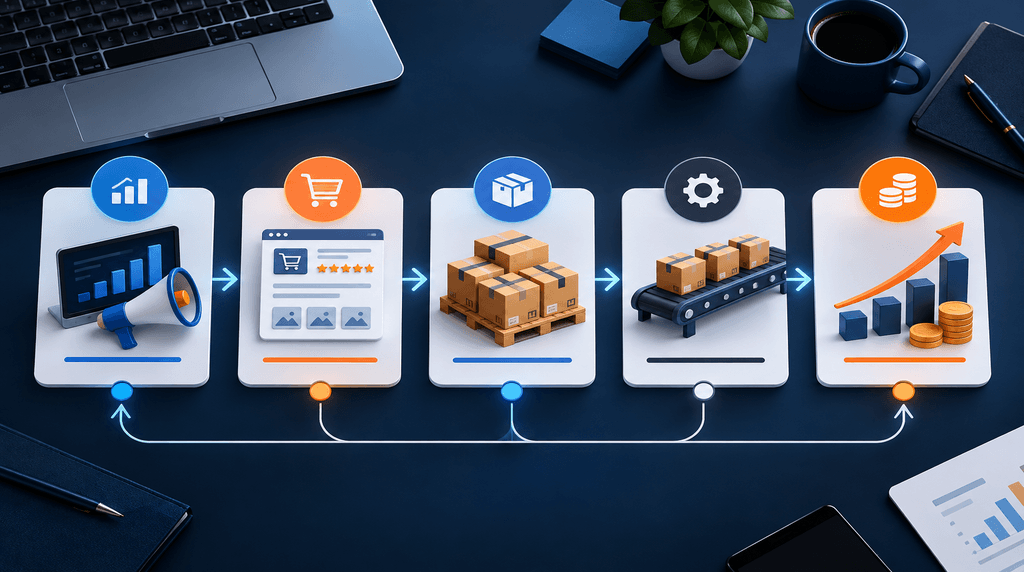
Think of an Amazon business as a connected system.
Marketing brings shoppers to your product. Your listing and offer turn those shoppers into customers. Inventory makes sure the product is available, while fulfillment and operations keep orders moving.
If one part is struggling, it can affect everything else.
So instead of asking only, “How do we get more sales?”
Ask, “Where is the bottleneck?”
1. Low Traffic, Look at Marketing and Visibility
If your product has a good conversion rate but not enough shoppers are seeing it, the problem may be visibility.
Look at search visibility, keyword rankings, impressions, Sponsored Ads performance, organic traffic, and competitor positioning.
A product can have good reviews, strong images, and competitive pricing, but sales will still be limited if shoppers cannot find it.
Marketing can help, but low traffic does not always mean you should simply spend more on ads.
First, make sure you are reaching the right shoppers and that your product is ready to convert them.
2. High Traffic but Low Sales, Look at Conversion
If your product is getting views and clicks but sales remain low, more traffic may not solve the problem.
Look at the product page.
Are the images clear? Is the pricing competitive? Does the title explain the product quickly? Are the reviews giving shoppers confidence? Is the product information complete?
Also consider your A+ Content, promotions, delivery options, product variations, and Featured Offer performance.
The key question is simple:
Once shoppers find the product, do they have a good reason to buy it?
If not, increasing traffic could simply give you more people who leave without purchasing.

3. Good Sales but Frequent Stockouts, Look at Inventory
Sometimes your marketing is working perfectly.
Customers are buying, sales are growing, and then the product goes out of stock.
That is not a marketing problem. It is an inventory problem.
Look at your sales velocity, supplier lead times, current inventory, replenishment schedule, and expected demand.
Ask:
How quickly is this product selling?
How long does replenishment take?
When should the next order be placed?
Do we have enough inventory to support upcoming demand?
Good marketing can create demand, but your inventory needs to be ready to support it.
4. Sales Are Growing but Operations Are Becoming Messy
As an e commerce business grows, managing it can become more complicated.
You may have hundreds of SKUs, multiple suppliers, different fulfillment methods, pricing updates, inventory changes, customer service requests, returns, and multiple sales channels.
At some point, the challenge is not simply getting more sales. It is keeping everything organized behind those sales.
Outdated product information, missed inventory updates, manual tasks, and inconsistent processes can slow down a growing business.
Clear processes, good systems, and automation can help reduce repetitive work and give teams more time to focus on decisions that actually require experience and judgment.
5. Revenue Is Growing but Profit Is Not, Look at the Numbers
Higher sales do not automatically mean a healthier business.
Revenue can increase while advertising costs, product costs, fulfillment, discounts, returns, and storage costs increase as well.
You may be selling more while keeping less.
That is why sellers should look beyond revenue and understand their actual margins.
Consider your product cost, Amazon fees, advertising, shipping, fulfillment, storage, returns, and other expenses that affect what you actually keep from each sale.
The question is not only, “How much did we sell?”
It is also, “How much did we actually make?”
A Simple Amazon Growth Check
When sales are not where you want them to be, look at the business step by step.
Low traffic, look at marketing and visibility.
High traffic but low conversion, look at your listing, pricing, reviews, and customer offer.
Frequent stockouts, look at inventory and replenishment.
Growing sales but growing operational problems, look at your systems and processes.
Growing revenue but shrinking profit, look at your margins.
The goal is to identify the actual problem before trying to fix it.
Don’t Scale the Wrong Problem
More advertising will not fix an inventory shortage.
More inventory will not fix a product that does not convert.
More traffic will not fix a weak product page.
And higher revenue will not automatically mean higher profit.
Amazon growth works best when marketing, conversion, inventory, fulfillment, operations, and profitability work together.
Before asking, “How can we grow faster?”
Ask:
“What is holding us back right now?”
Find that bottleneck first, then build the strategy around it.
That is often where sustainable growth starts.

We help brands identify opportunities across Amazon, e-commerce operations, inventory, fulfillment, and marketplace growth.
Let’s take a closer look at what’s holding your business back.
Book a strategy call with us here.