
US vs. CANADA E-commerce: Key Market Differences
GF
Canada and the US share a border, a language, and Amazon. But if you are running the same playbook in both markets, you are likely leaving money on the table or walking straight into compliance problems you never saw coming.
Same platform, very different market
Amazon.com and Amazon.ca look identical on the surface. Same interface, same FBA (Fulfillment by Amazon) logic, same ad structure. The markets underneath them, however, behave very differently in terms of scale, competition, regulation, and what customers actually expect.
For brands managing inventory across both countries, understanding where those differences live is not just useful. It is the difference between a well-run operation and one that is always putting out fires.
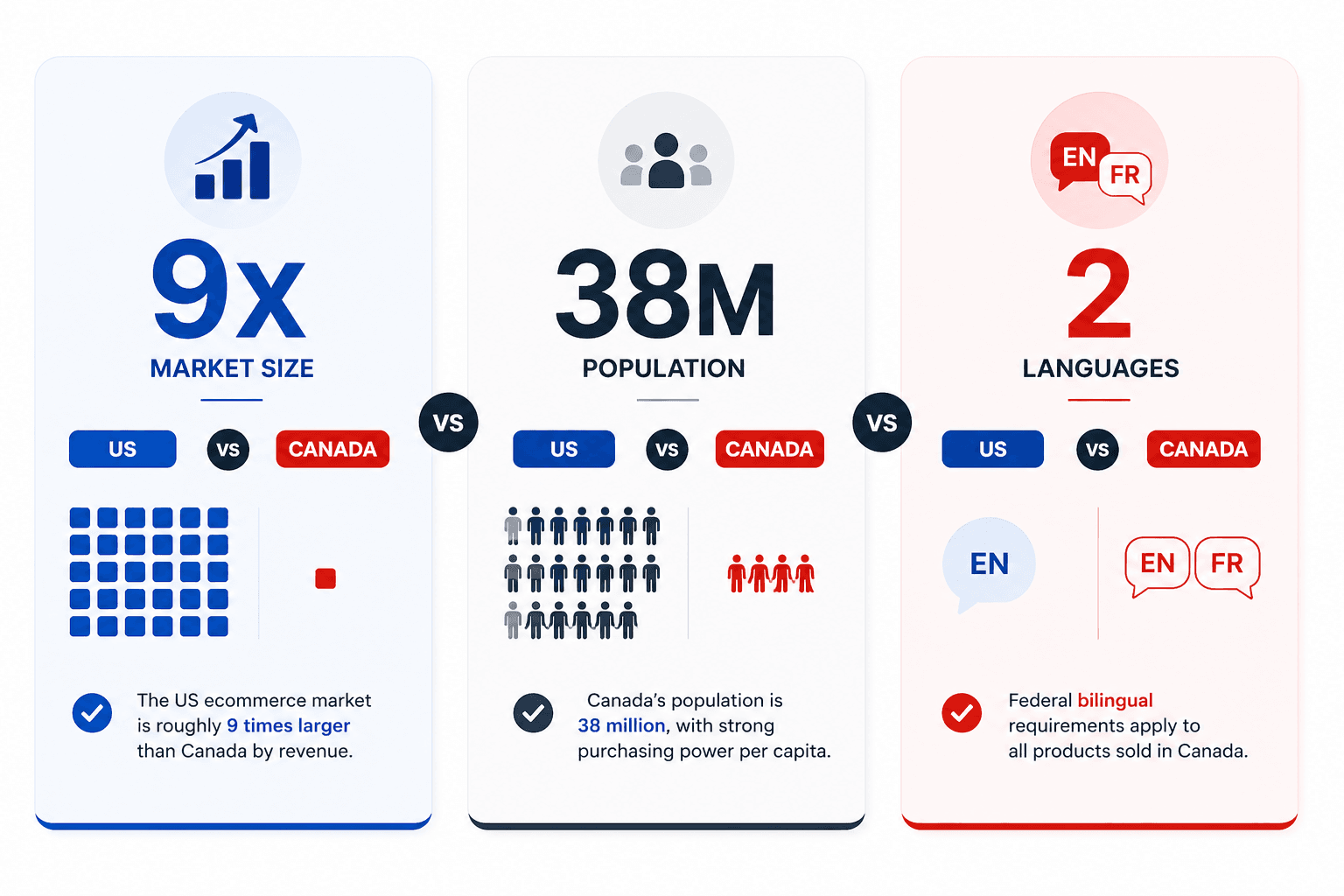
Scale and Competition
The US is a high-volume but highly competitive market. Most categories are saturated, PPC costs are high, and ranking requires significant investment with little room for error.
Canada is less crowded, with lower keyword costs and faster traction for well-optimized listings. The trade-off is lower overall demand, but it also makes Canada a strong testing ground. It is ideal for launching products, building rankings, and refining listings before scaling into the more competitive US market.
Compliance: the part that trips most sellers up
This is where sellers get caught off guard most often. Canada has specific requirements that do not exist south of the border, and none of them are optional.
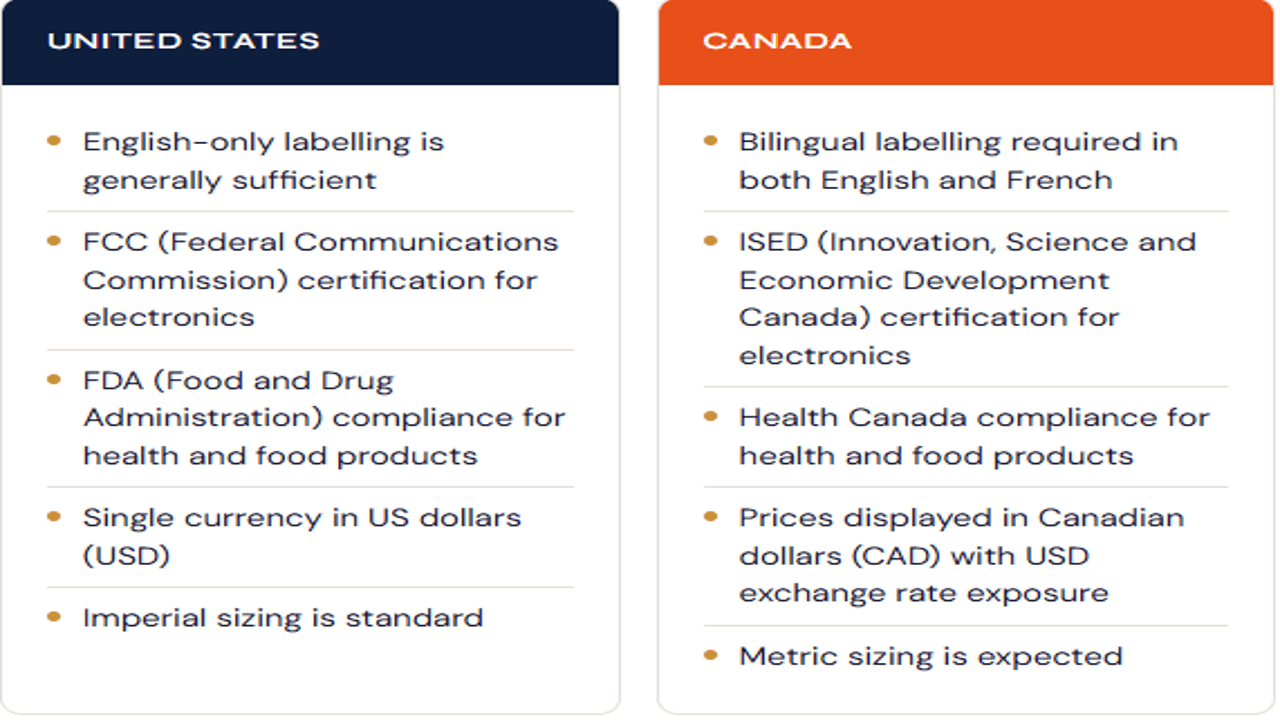
Bilingual labeling is a common issue—product packaging must include both English and French, and in some categories, listings too. Non-compliance can lead to listing suppression or higher returns.
For electronics, US FCC approval does not apply in Canada. Separate ISED certification is required and must be handled independently.
Fulfillment and Inventory
Amazon US and Canada operate separately—FBA inventory is not shared. You must hold dedicated stock in Canada. Cross-border fulfillment outside FBA is usually not viable due to higher costs (duties, brokerage) and slower delivery times that can impact seller performance.
Canadian buyers are more price-sensitive and highly aware of USD–CAD conversion. A competitive US price may feel expensive in CAD, so pricing should be localized—not just converted.
Review dynamics also differ: fewer total reviews mean strong review counts stand out more, but growth is slower. You’ll need a proactive strategy to build review velocity early.
Before Selling in Both Markets
· Maintain separate FBA inventory for US and Canada
· Ensure packaging meets bilingual (English/French) requirements
· Set earlier reorder points for Canada due to longer restock timelines
· Build a CAD pricing strategy (not simple USD conversion)
· Secure Canadian certifications (e.g., ISED vs FCC)
· Use Canada’s lower competition to test and validate products before scaling in the US

The Bottom Line
Neither market is harder to win in. They just need a different approach. Canada rewards sellers who take compliance seriously and invest in clean inventory planning. The US rewards speed, volume, and aggressive optimization. The brands that do well in both are the ones that treat each market as its own operation rather than assuming one setup fits everywhere.
Get the foundations right from the start in each market and you will have a real advantage over the majority of sellers who never take the time to make that distinction.
Jetfold Commerce helps brands navigate multi-market Amazon operations from inventory planning to compliance and reporting.