
New PostThe Amazon Image Stack Framework: How Each Listing Image Moves a Shopper From Click to Conversion
GF
On Amazon, shoppers don't study listings, they scan them.
They see your product in search results, decide whether to click, then quickly evaluate whether it's worth buying. That's why your Amazon images shouldn't be treated as seven separate graphics. They should work together to move the shopper through a decision.
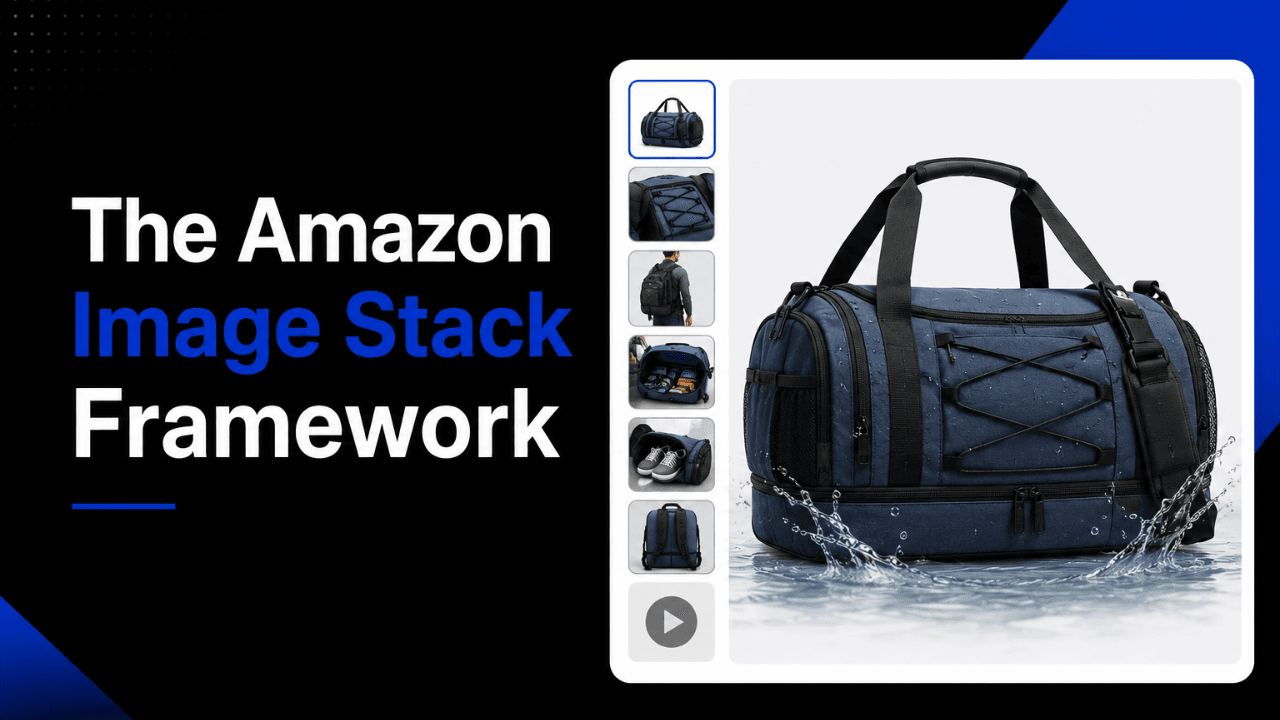
The Main Image Earns the Click
Your main image has one primary job: CTR.
Before shoppers can see your benefits, features, or A+ Content, they need to choose your product over the listings surrounding it.
The key question isn't simply, "Does our main image look good?"
It's:
"Does our main image give the right customer a reason to click when placed beside our top competitors?"
A beautiful image isn't automatically a high-performing image. Evaluate it in the context where customers actually see it: the Amazon search results.
Secondary Images Build the Case to Buy
Once the customer clicks, the job changes from earning attention to earning confidence.
Your secondary images should answer the questions standing between interest and purchase:
What makes this product different?
What are the most important benefits?
How does it work?
Is it right for me?
What concerns might stop me from buying?
Not every product needs the same image sequence. A technical product may require more education. A size-sensitive product may need clearer dimensions. A differentiated product may need to demonstrate why it's better than traditional alternatives.
The principle is simple:
Every image should have a reason to exist.

Don't Just Show Features, Communicate Why They Matter
A common mistake is filling images with features without explaining their value.
Strong creative connects:
What the product has → What it does → Why the customer should care
Likewise, don't overload a single image with five competing messages. Your most important differentiator or benefit may deserve its own moment, while supporting benefits can be grouped elsewhere.
Let Customer Insights Guide the Creative
Reviews and customer feedback can reveal what your image stack needs to communicate.
Look for patterns: What do customers love? What confuses them? What problems are they trying to solve? What alternatives have they tried? What almost stopped them from buying?
These insights can help identify which benefits deserve emphasis and which objections your images need to address.
CTR and CVR Are Different Problems
If shoppers see your listing but don't click, you may have a CTR problem.
If they click but don't buy, you may have a CVR problem.
Those require different solutions. Changing the entire image stack without understanding where the funnel is breaking can create more problems than it solves.
Diagnose first. Optimize second.
The strongest Amazon image stacks aren't necessarily the ones with the most information or elaborate designs. They're the ones that understand the customer's decision journey and deliver the right message at the right moment.
The question isn't just whether an image looks good. It's whether it's doing its job.