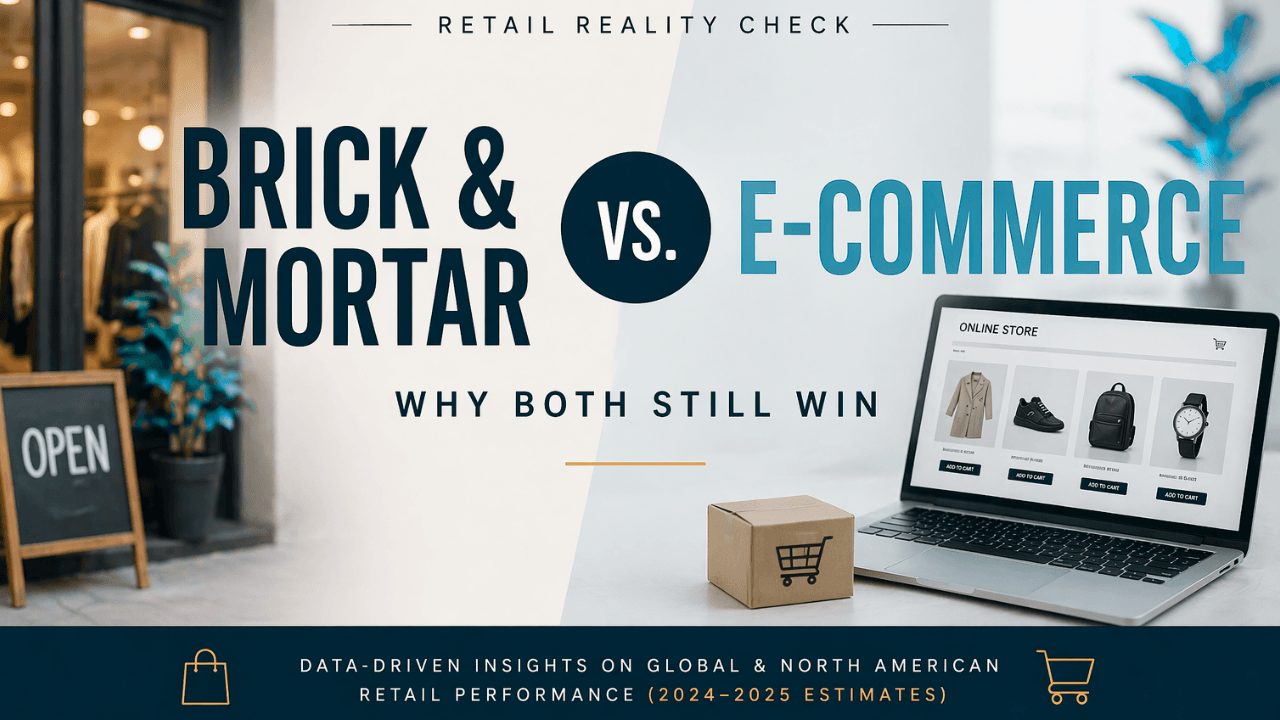
Brick & Mortar vs. E-Commerce: Why Both Still Win
GF
Physical retail isn’t dead — and e-commerce isn’t slowing down. Both continue to evolve and deliver measurable results. For US and Canadian retailers, the real question isn’t which channel to choose, but how to leverage both effectively.
BRICK and MORTAR
The High-Volume Foundation
Higher spend per visit. In-store shoppers often spend more per visit, driven by product interaction, immediate availability, and in-person upselling.
Lower return rates, higher purchase confidence. In-store return rates typically range from 8–10%, compared to 20–30% for e-commerce. Seeing and trying products before purchase reduces uncertainty.
The omnichannel closer. Many customers research online but complete purchases in-store. Physical locations play a critical role in converting intent into sales.
Social experience sells. Store atmosphere, staff interaction, and community presence create emotional engagement that drives loyalty and repeat visits.
Trust through presence. A physical storefront reinforces brand legitimacy, especially for first-time customers evaluating a business.

E-COMMERCE
The Scalable Growth Engine
Steady, sustained growth. E-commerce continues to grow at an estimated ~5–8% annually in mature markets like the US and Canada, reflecting a more stable post-pandemic trajectory.
Where research begins. Approximately 70–75% of customers start their buying journey online, even if the final purchase happens in-store.
No geographic ceiling. Online stores can reach customers nationwide without expanding their physical footprint — enabling scalable growth.
Lower overhead, more flexibility. Reduced fixed costs (rent, utilities, in-store staffing) allow for greater flexibility in pricing and operations.
Always open. E-commerce operates 24/7, capturing demand beyond traditional store hours.
Growing share of retail. E-commerce now accounts for ~20–21% of global retail sales, and continues to gradually increase its share each year.
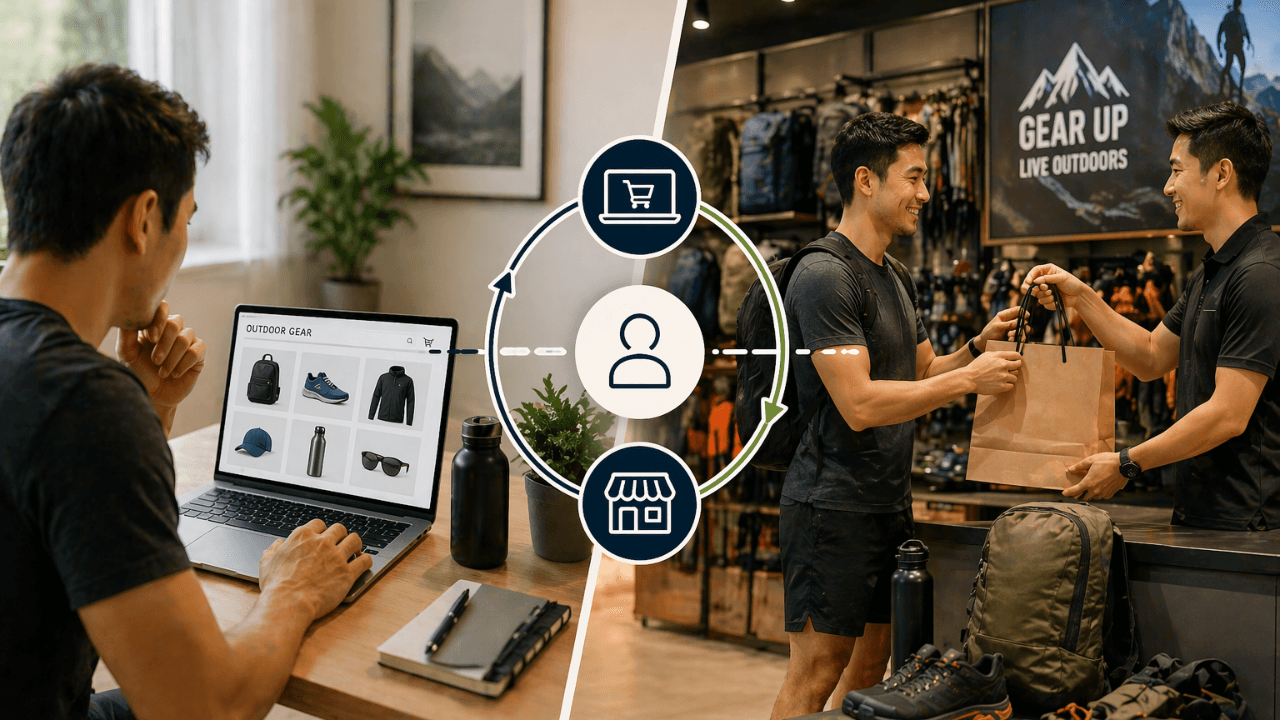
The Real Advantage: Omnichannel Retail
The most successful retailers today aren’t choosing between physical and online— they’re integrating both.
Customers move seamlessly between online research and in-store purchases. Businesses that align their channels create a smoother buying journey, improve conversion rates, and build stronger customer relationships.
The Bottom Line
Brick-and-mortar drives volume, trust, and conversion. E-commerce delivers reach, convenience, and scalability.
Retailers that combine both don’t just compete — they win.
If you're not leveraging both channels yet, you're leaving growth on the table. Let’s talk about how to build a simple omnichannel strategy that actually works.