
Amazon’s Latest AI Image Update: What Sellers Need to Know
GF
AI-generated images have quickly become part of the Amazon seller toolkit. From lifestyle images to creative advertising, AI makes it easier for brands to produce polished content without a traditional photoshoot.
But Amazon is now putting more structure around one specific type of AI content: photorealistic people generated entirely by AI.
What Changed?
The update comes as New York introduces new disclosure requirements for advertisements featuring AI-generated “synthetic performers.” The law took effect on June 9, 2026, requiring certain advertisements using AI-generated people to disclose that the performer is synthetic.
Following this shift, Amazon introduced requirements for sellers using photorealistic AI-generated people. Qualifying images and videos must include specific metadata before being uploaded to Amazon.
The requirement can apply to buyer-facing content such as:
· Product listing images
· A+ Content
· Brand Story
· Amazon Stores
· Product videos
· A+ and Store videos
· Advertising videos
Why Does This Matter?
As AI-generated people become increasingly realistic, it can be difficult for shoppers to know whether they're looking at a real person or a synthetic one.
Amazon's move reflects a broader shift toward transparency around AI-generated content.
And this is where the update becomes more interesting for sellers.
AI is no longer simply a behind-the-scenes design tool. Platforms and regulators are beginning to establish rules around how AI-generated content should be identified when customers see it.
For sellers, that means AI disclosure is becoming another consideration when creating and publishing marketplace content.
What Should Sellers Do?
1. Review existing AI-generated content.
Don't only think about new images. Check existing listing images, A+ Content, Brand Story, Store assets, and videos that may contain photorealistic AI-generated people.
2. Know when disclosure is required.
If a photorealistic person was entirely generated by AI, make sure the appropriate Amazon tagging or disclosure process is followed.
3. Add AI disclosure to the content workflow.
AI review shouldn't happen after everything has already been published.
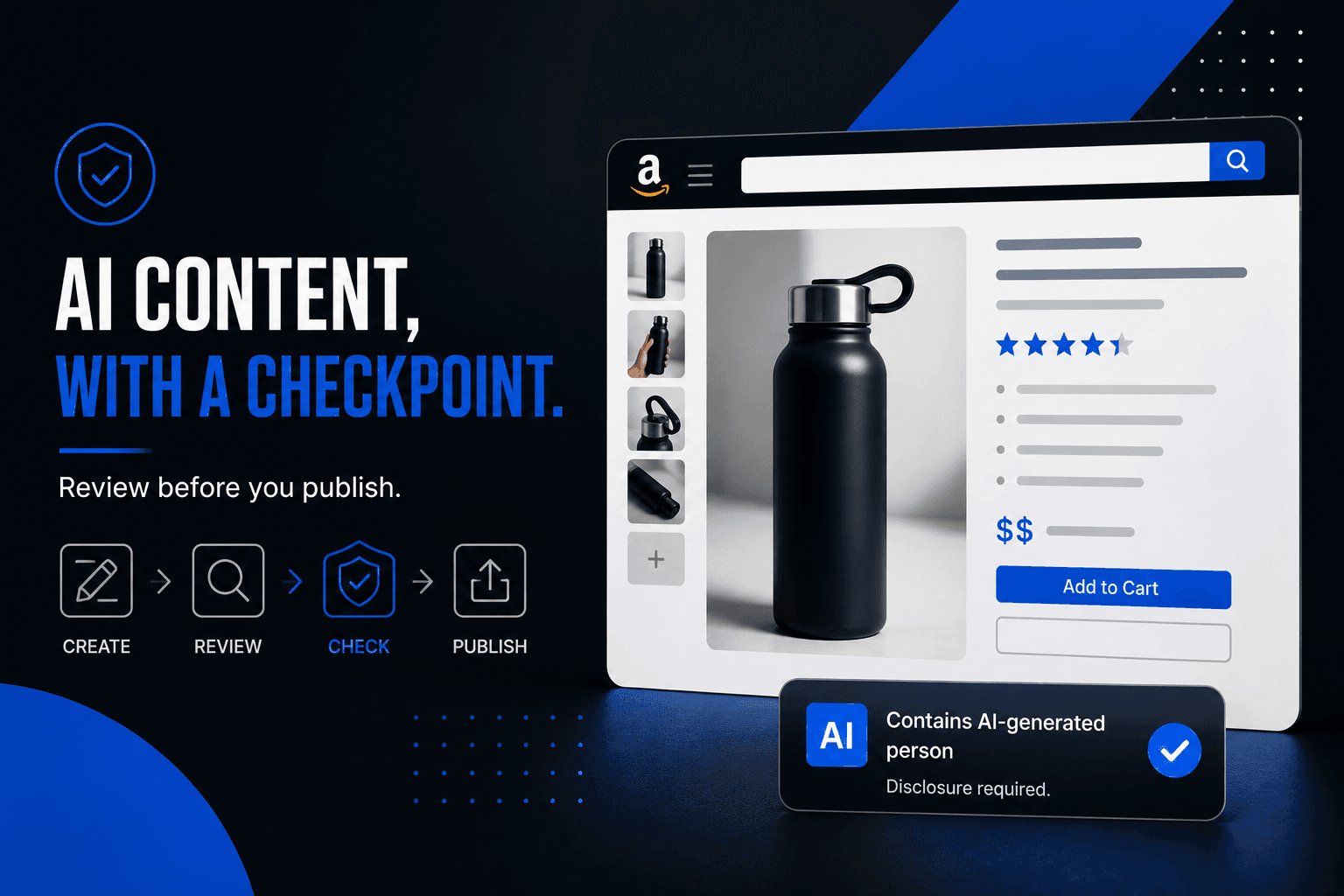
A simple process is:
Create → Review → Check AI Disclosure → Publish
What Sellers Should Take Away
This update doesn't mean sellers need to stop using AI.
It simply adds another consideration to the content workflow: knowing when AI-generated content needs to be disclosed.
The bigger takeaway is that AI-generated content is becoming part of Amazon's broader compliance landscape. As these tools become more common, sellers will need to pay attention not only to the creative possibilities of AI, but also to how platforms are choosing to identify and regulate it.
The Bottom Line
The bigger story isn't that Amazon is limiting AI. It's that AI-generated content is becoming something sellers need to account for, not just something they create.
For now, the focus is photorealistic AI-generated people. But as AI becomes a bigger part of marketplace content, sellers should expect more clarity around how synthetic content is identified and handled.
The best approach? Keep using AI creatively but stay ahead of the rules as they evolve.